what makes us believe in conspiracy theories?
Scientists have figured out why we believe in conspiracy theories.
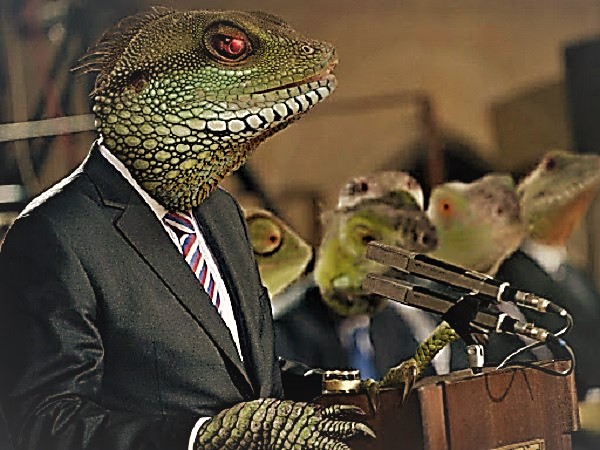
Most recently, a survey was conducted among Americans, which showed that a third of them believe that the coronavirus is of artificial origin and was created for our death in secret laboratories. Moreover, two-thirds of those surveyed are sure that the US government is hiding information about contacts with aliens from them, and 4% even believe that reptilians rule the world.
Scientists are sure that conspiracy thinking is not a sign of “darkness” and suggestibility of a person, but a special phenomenon to which all strata of society are subject.
Conspiracy theories aren’t just for Americans. In 2018, VTsIOM conducted a survey among our fellow citizens and it turned out that 67% of Russians are sure that the “world government” decides the fate of the planet. 51% of them have higher education, and 53% reported that they consider themselves to be wealthy. Reptilians may secretly live among us Psychologists say that conspiracy thinking is a feature of the human brain.
Our mind is arranged in such a way that we believe in conspiracy theories, regardless of what nation we belong to, what education we have and what society we are in. To understand why we tend to believe in conspiracies and secret societies, we need to find a definition for the concept of “conspiracy theory”.
As it turned out, this is not an easy task, since most modern formulations leave much to be desired. For example, the very authoritative Oxford Dictionary states that a conspiracy theory describes events that occurred as a result of a conspiracy of a group of people. Other publications give a very similar explanation.
Must Read: 9 Historical Figures Whose Existence Scientists Question
But every minute there are crimes in the world that are committed by a group of people in a secret conspiracy, but they are not classified as conspiracy theories. Conspiracy theorists have always doubted the landing of American astronauts on the moon Dutch psychologists Jan-Willem van Proyen and Mark van Vugt, authors of the scientific work “Conspiracy Theories: Psychological Mechanisms”, proposed their signs of a conspiracy theory: The case certainly concerns a certain organization. If a person started something himself, then we are no longer talking about conspiracy theories; The conspirators certainly pursue sinister goals.
Therefore, if you secretly joined forces to prank a colleague, then this is already different; The plot of the conspiracy relies on building causal relationships between conspirators and events. Very often (almost always), these connections are entirely fictional; The very idea and scenario of the actions of the conspirators are always shrouded in mystery. Once a conspiracy is discovered, it is no longer a conspiracy theory. This is, so to speak, the canons of the genre. But there are other signs of such theories that are less obvious.
Psychologists single out such a feature as the lack of evidence, which is more of a plus for a conspiracy theory than a drawback. It is impossible to prove a link between vaccination and autism, but that is why this conspiracy theory is especially popular. Its supporters are sure that this is a sign that the secret is kept especially strictly.
Conspiracy theorists most often suspect Freemasons of ruling the world But if there is evidence, then their conspiracy theorists also interpret it in favor of their theory. In their opinion, this speaks of a very skillful falsification of facts, which only a powerful secret force can do. Given this, any arguments with conspiracy theorists are a waste of time. Another sign can be considered the impeccability of attackers. It is known that even a small conspiracy is secretly incredibly difficult to organize. The human factor will always intervene – people make mistakes, quarrel, betray, and get captured by emotions.
Conspiracy theorists consider the authors of the conspiracy to be omnipotent and fantastically prudent. Thousands of people participate in their dark deeds, but not one of them makes mistakes. It is also important that any conspiracy theorist speaks from the position of the accuser and one cannot count on his objectivity. They have no facts in favor of their theory, but there are always a lot of tricky questions to the official version. 5G mobile Internet technology is often accused of zombifying people The logic for conspiracy theorists does not work.
Psychologists Mike Wood and Karen Douglas once conducted an interesting experiment – they offered a group of people three versions of the death of Osama bin Laden. One of them was real, and the other two were conspiracy theories and, moreover, contradictory. Interestingly, the participants in the study, who believed in one conspiracy theory, did not rule out the veracity of the other, even though it contradicted their chosen one.
This proves that the facts are not important for conspiracy theorists – they simply believe or do not believe because of the peculiarities of their thinking. The main of these features can be called the need for control. A person needs to believe that someone controls his life and that it is subject to strict logic. The thought that our destiny is a chain of accidents frightens and saddens us.
Scientists give the second most important role to the reassessment of competence. Many of us, after watching a short video on YouTube, immediately begin to feel like experts and talk about difficult things. Home conspiracy theorists prefer to uncover conspiracies in the kitchens And, and finally, the “error of proportionality” works. We are accustomed to believing that the cause of an event is commensurate in scale with the event itself. Therefore, no one wants to believe that US President John F. Kennedy was killed just by a mentally unbalanced guy, and Princess Diana died in the most ordinary car accident.