
A Day in the Life of Ancient Greece

Children run naked in physical education, a woman observes the world through a gynaecium window, a man at a hetaera or in a bathhouse. Compare your day with the usual day of an ordinary citizen of Hellas.
Ancient Greece is a male society. If a boy was born in the family, the Greeks hung a laurel wreath (a symbol of victory) on the door of the house, if a girl – a woolen thread (which probably symbolized the important purpose of the future woman – to weave; to give birth to children and keep the house – by default).
Life of Ancient Greece
Morning
Your day starts at dawn. Breakfast is modest (a slice of plain barley bread soaked in wine) and takes place in solitude (the wife lives in her own half, and you encounter very little).
After breakfast, it’s time to go on business. Having opened the door, you almost knock down a passer-by with it (the streets of Ancient Hellas are so cramped and crooked). Ahead is a day filled with worries: the Hellenes were very hardworking, and even if the family had slaves who worked from dawn to dusk, they still had to get up very early – otherwise it was possible not to find the right person at home.
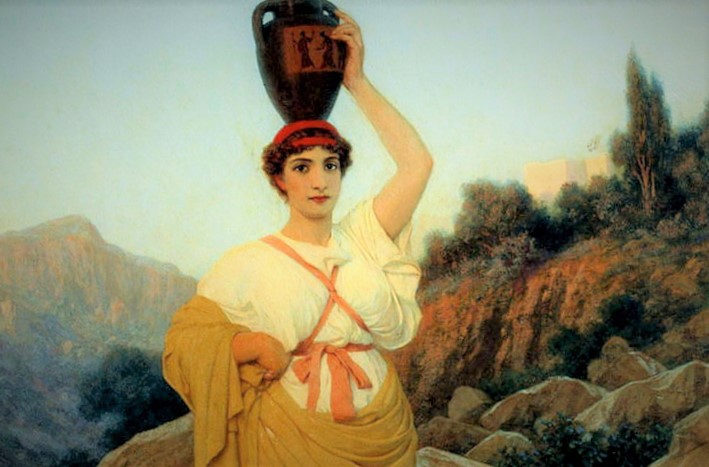
Your life passes in the closed space of the gynaecium*. The female part of the house, where men do not have access; the premises were so taboo that Demosthenes described a case when thieves robbed the gynaecium, but none of the male neighbors dared to enter there to help, although everyone heard screams and saw how things were taken out of the house. You are allowed to breathe in the closed space of the courtyard. True, your sons under the age of seven can enter the gynecium completely freely (and live with you) – they are not yet considered full-fledged men.
*If you belong to a wealthy family, then your house is two-story, made of brick, the roof is covered with tiles, and the floors of the first floor are lined with mosaics. If funds are tight, the dwelling is much more modest: here the main materials are pressed earth and wood. In any case, the windows are small and almost under the roof itself. The house is surrounded by a deaf fence.
Day
Those who are already seven years old spend time in a school (palaestra) where they learn reading, music, counting and writing. Every school has a playground where the boys wrestle (this is an important lesson, because in the future many of these boys will become warriors). Girls study at home under the supervision of mothers and nannies. All of them must be literate, as well as be able to sew and weave (but not everyone could make fabric; if a woman knew how to do this, she was considered a profitable bride).
The notable exception was Sparta . Spartan girls were trained in almost all subjects on a par with boys, including martial arts. It is known that the attitude towards a woman in Sparta was much more respectful compared to the same Athens.

From the age of 16, boys from wealthy families entered the gymnasium, where they studied a whole cycle of different sciences: from astronomy to philosophy and rhetoric. The word “gymnasium” is derived from two ancient Greek words: “naked” and “exercise”. Among other things, much attention was paid to the physical training of young men. All exercises were carried out in the open air and without fail in the nude. This achieved the upbringing of the “Greek spirit”, which was based on strong male friendship.
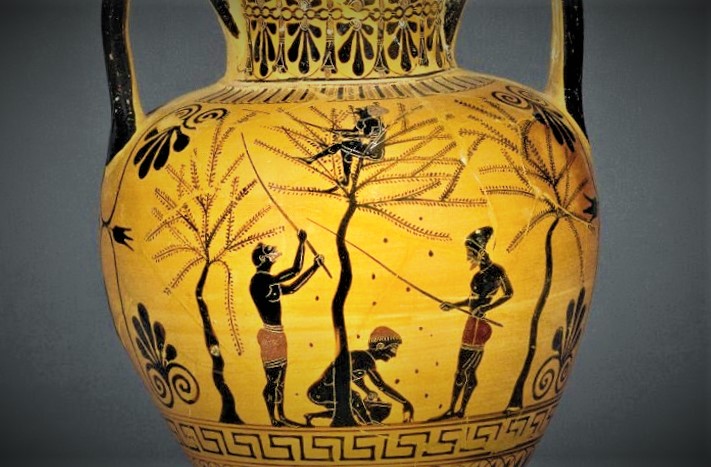
One of the main occupations of the adult male population (not counting the warriors) was cattle breeding. It was the size of the herd that testified to the well-being of the owner. Cows, sheep and goats were a valuable source of meat, milk, hides and wool. Bulls were also used for plowing – agriculture was also a very honorable and important occupation of the Hellenes (the Greeks sowed bread, planted grapes and olives).
Must Read:
Without hesitation, why more and more women go without a bra
10 delicious dishes that are easy to cook in a slow cooker
Men loved to hunt, so they kept dogs at home (they were also needed to guard the herds), took care of them and considered them valuable property. Interestingly, there were very few horses – only a very rich person could afford to buy a horse (their maintenance was not cheap). Ass and mules served as pack animals. Pigs were also bred for food.
All this, of course, applies to more or less successful citizens. The poor lived very modestly, they had no livestock, they ate hunting and fishing. Sometimes there was no house itself – the poor were simply hired as laborers by noble people, with whom they lived.
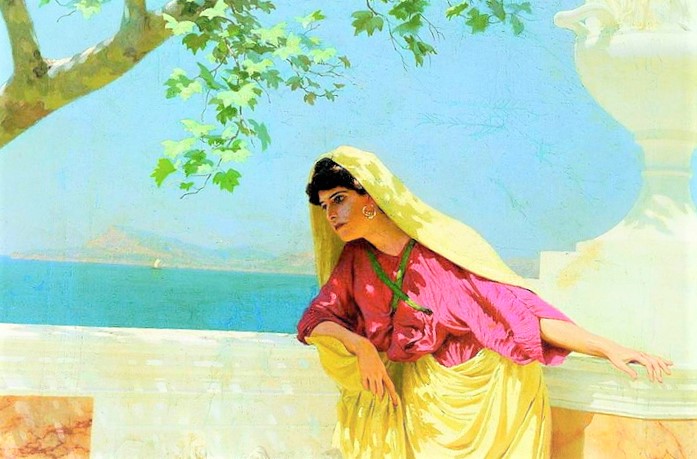
Poor ladies enjoy freedom a little more than usual: they go out to the city for shopping. Wealthy families had slaves for these purposes. Exception to the rule: religious festivals. At this time, Greek women invited friends to visit, arranged feasts and even went to theaters (although not everyone could watch performances).
Despite the fact that you work around the house from morning to evening on a par with slaves (even if the family was prosperous – the woman was instructed to wash, cook and clean with the servants), eternal dirt reigns in your house. Mainly – soot from the hearth, fat, flows down from fried meat, smokes resinous wood, which is used for lighting (even Homer in his poems continually complains that soot spoils weapons hung on the walls). All this reliably covers the walls of the house, and it is simply impossible to clean them. You do not follow the cleanliness of the floor at all (there are bones and even whole skins of eaten animals on the floor). For what? New meal and new leftovers. The same can be said about the courtyard.
Evening
The Greek may well visit the theater. This, however, is also not forbidden for a woman, but you will only be allowed to participate in tragedies, which, according to the ancients, will instill in you the necessary moral qualities. But comedies that make fun of human vices are watched only by men, because the aforementioned ones can confuse the “weak” female nature. An evening is unthinkable without baths, which the Greeks visited regularly, in contrast to the representatives of Central Europe of later centuries – “Dirty History” as it is.
So, comedies or evening in the company of girlfriends. But only on holidays. But a variety of games, oddly enough, are available to everyone, even children, and are generally very common in ancient Greece. Historian Andrei Savelyev in his book Life and Everyday Life of the Hellenes describes a simple game of pebbles: the participants threw up five pebbles and tried to catch them all on the back of their hands. Who caught more – won. Blindfold and ball games were popular, as well as gambling.
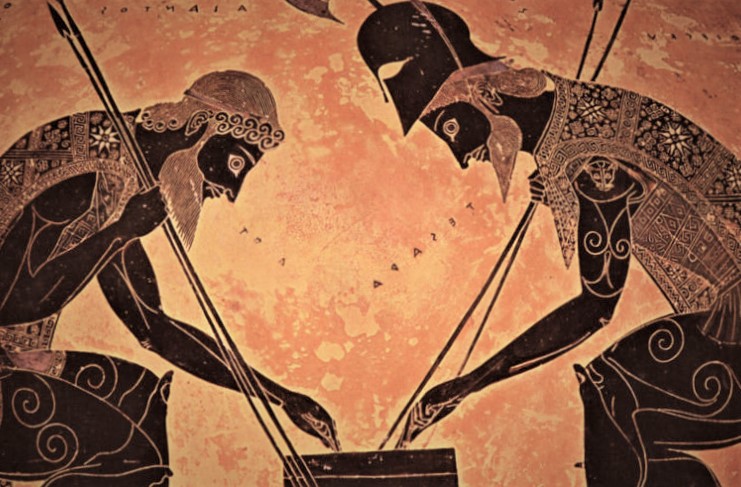
Especially loved in Hellas the game of dice (analogous to modern), so much so that the government had to ban it (but who could stop it – like today, in ancient Greece there were underground gambling houses). But most of all men adored cockfights. And here the laws were already exclusively “for”, ordering the young men to attend cockfights at least once a year – so that they could see an example of how hard they should fight.
Night
The men and women of Hellas sleep. Everyone in their own bed. Their marriages are not made in heaven, but by calculation. The father and the future groom made a deal (with money, cattle or precious metals; depending on the appearance and performance of the girl, for example, they could give from 1 to 20 cows for her). The girl, who, by the way, could not be more than 12 years old (the groom is 12–15 years older), did not take part in this. Therefore, marriage for a woman is practically slavery. It was believed that women are incredibly lustful, so they always need to be kept in check, “using” only for the purpose of procreation, for which the husband calls his wife to his bedroom (of course, you can’t refuse – he will beat you).
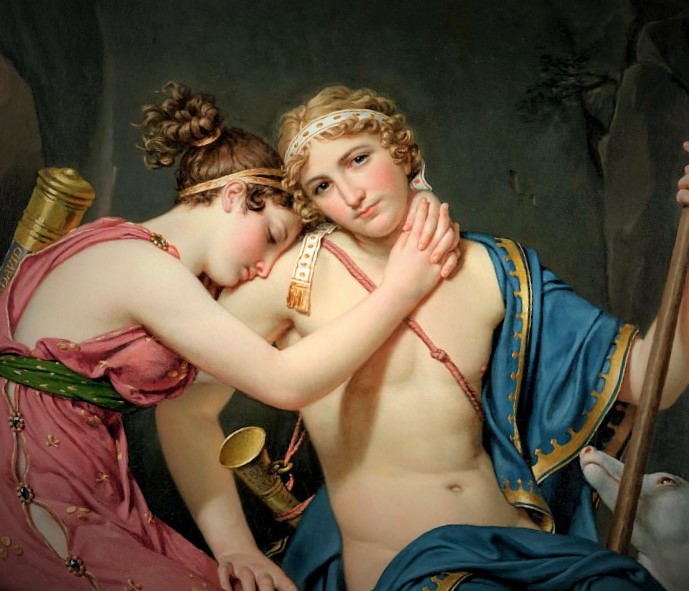
Love and sincere friendship between a man and a woman in Hellas was downright an exception. With true tenderness, adult men treated only young men (sodomy was not officially prohibited by law, but, however, it was not encouraged; a typical couple: an experienced old man and a beautiful inexperienced young man), and also … to educated hetaerae, with whom men felt relaxed. It was the priestesses of love, according to historians, who could contribute to the gradual emancipation of women and improve the attitude towards her in society.



One Comment