How the Parisian Trouser Ban Shaped Women’s Fashion
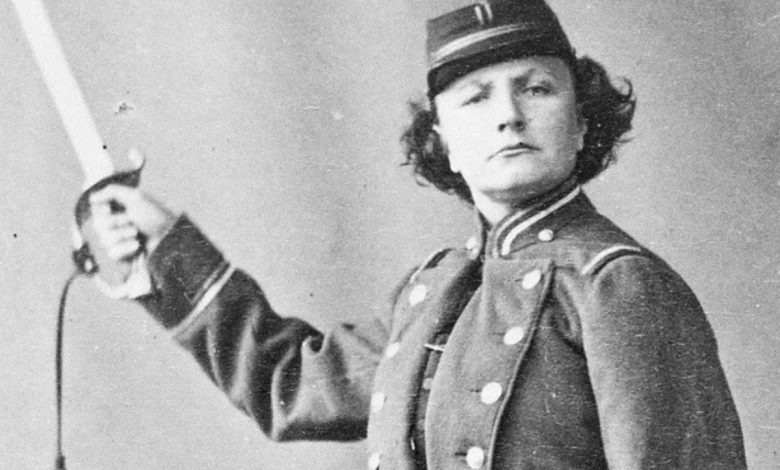
For American women who view jeans and slacks as everyday wardrobe essentials, the idea of needing police permission to wear pants is unthinkable. Yet in Paris—a city that has long dictated US consumer fashion trends—a strict November 1800 decree, the Parisian trouser ban, officially prohibited women from wearing pants. The archaic rule, which required any woman wanting to “dress like a man” to secure formal police authorization, survived on the books for more than two centuries. It serves as a stark reminder of how fiercely the simple act of women wearing trousers was historically opposed.
During the French Revolution from 1789 to 1799, working-class female protestors routinely wore pants alongside male revolutionaries at the barricades. They fought for identical liberties, and their political demands were immortalized in 1791 when playwright and activist Olympe de Gouges published the “Declaration of the Rights of Woman and of the Female Citizen”.
But the push for gender equality faced a swift and brutal retaliation. French authorities condemned de Gouges as an “unnatural” woman, ultimately executing her by guillotine in 1793. By November 1800, the French government codified this patriarchal backlash into a sweeping sartorial crackdown, outlawing the garments for women entirely in order to protect traditional gender boundaries.
Throughout the 19th and early 20th centuries, defiant women consistently ignored the Parisian trouser ban. Some applied for official medical exemptions from local magistrates, while others simply risked public arrest and humiliation. Courageous women rebelled against heavy, stifling, floor-length dresses in order to ride horses, operate the newly invented bicycle, or, in certain documented cases, to live and work authentically as men.
This underground resistance in France’s fashion capital had a profound ripple effect across the Atlantic. Because Paris served as the undisputed center of the global apparel industry, the bravery of these French women slowly shifted international perceptions. As Parisian rebels gradually normalized these bifurcated garments, they paved the way for American designers to market similar styles. Without those early European rule-breakers, the booming US market for women’s activewear, denim jeans, and tailored business suits might have been severely delayed.
Though the restriction became a widely ignored historical relic by the mid-20th century, city officials repeatedly refused to formally repeal it. Lawmakers argued that striking down an obsolete law was a waste of legislative time. It wasn’t until January 2013 that the French government officially declared the regulation null and void.
France’s then-Minister of Women’s Rights, Najat Vallaud-Belkacem, led the modern charge to legally void the 1800 edict.
“This ordinance is incompatible with the principles of equality,” Vallaud-Belkacem stated upon its revocation.
Today, the modern US fashion industry thrives on the sartorial freedom those early activists fought to secure. The global market for women’s trousers now generates billions in annual retail sales. When American consumers purchase a simple pair of everyday jeans, they carry forward a rebellious legacy sparked by women who risked their reputations, freedom, and lives for the right to dress exactly as they choose.