Bizarre Ocean Survival: Inside the Mind-Blowing Sea Cucumber Defense Mechanism
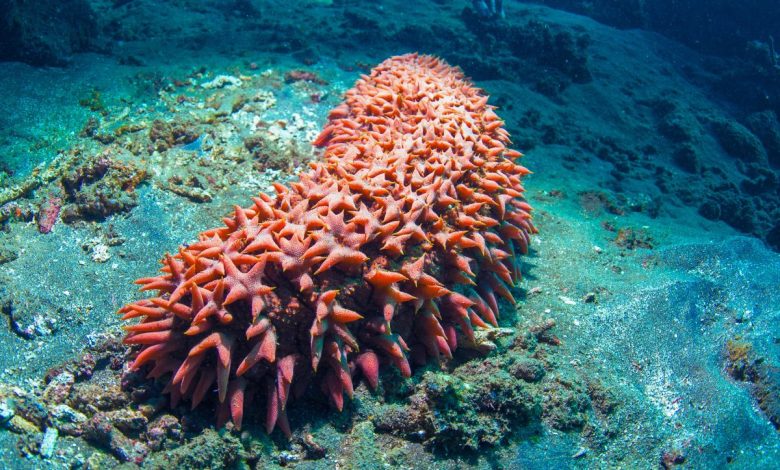
The radical sea cucumber defense mechanism stands out as one of the most bizarre and extreme survival strategies in the underwater kingdom. Rather than fleeing or relying on heavy armor when threatened by predators, these squishy marine invertebrates deploy a biological weapon like no other: they violently eject their own internal organs into the surrounding water.
Marine biologists have long been fascinated by how echinoderms navigate survival along the ocean floor. When facing immediate danger from crabs, fish, or sea stars, the organism contracts its muscular body wall with tremendous force. This internal pressure causes a violent rupture near the anus, shooting out a cluster of thread-like structures called Cuvierian tubules.
These tubules are not mere tissue; they are saturated with potent toxins known as holothurins, which can paralyze or irritate marine predators. Once released into seawater, the threads expand exponentially, becoming an ultra-sticky, tangled mesh that traps attackers. The predator becomes hopelessly entangled, allowing the sluggish creature to make a slow but successful escape along the seabed.
While expelling vital organs might sound like a fatal sacrifice, it forms the core of the sea cucumber defense mechanism. The animal does not die after jettisoning its digestive tract, respiratory trees, or reproductive organs. Instead, specialized stem cells immediately initiate a rapid cellular repair process to reconstruct every lost internal system.
Within a span of two to five weeks, the creature completely regenerates its internal architecture without suffering long-term harm. This remarkable metabolic feat allows the animal to repeat the defensive tactic throughout its life cycle when confronted by lethal threats. Scientists are actively studying these tissue-regeneration pathways to unlock breakthrough medical therapies for human organ repair.