Audio Exposes Fatal Error in Deadly Spain Train Crash
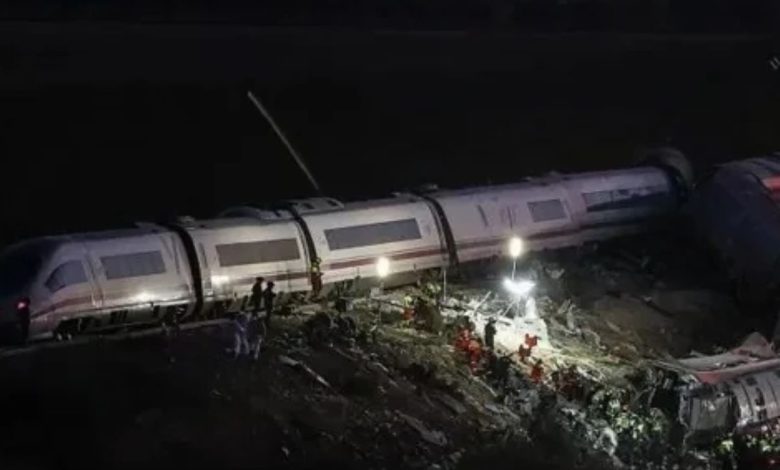
Leaked audio recordings reveal a Madrid control center instructed a high-speed train to proceed just minutes before it slammed into a stationary passenger train on Wednesday, killing at least 68 people and injuring more than 100. The catastrophic Spain train crash occurred in the central region of Castilla-La Mancha on the heavily traveled Madrid to Seville route, prompting a nationwide investigation into human error and raising immediate safety concerns for Americans traveling abroad.
The collision happened Wednesday morning when a state-operated Renfe train plowed into the back of a halted train owned by private operator Iryo. Emergency crews worked through the night using cranes to pull apart the mangled carriages, while Spain officially began three days of national mourning on Thursday.
Spanish media published chilling radio exchanges between the train operators and the Atocha control center in Madrid. Based on these recordings, a dispatcher allegedly cleared the Renfe train to continue down the track, completely unaware or failing to recognize that the Iryo train was still obstructing the line ahead. Spain’s transport minister told reporters the crash involved an “error” driven by “inexplicable circumstances”. Authorities have not declared a final cause, but the tapes strongly point to a lethal manual override of the rail network’s collision-avoidance protocols.
The Madrid-to-Seville corridor is a primary artery for European transit and a staple for American tourists exploring the Iberian Peninsula. Because US consumers routinely rely on Europe’s high-speed rail network as a safer, faster alternative to driving or flying between cities, Wednesday’s disaster strikes close to home for the travel industry.
This is the second deadly high-speed train crash in Spain this year alone. It also ranks as the country’s worst rail tragedy since 2013, when a derailment near Santiago de Compostela claimed 80 lives. The compounding accidents are forcing European regulators to scrutinize track signaling technology, control center staffing, and how human dispatchers interact with automated safety systems. American travel agencies and tour operators are already fielding questions from concerned clients holding rail tickets for upcoming European vacations.
Survivors described a scene of sudden, violent destruction. A passenger aboard the Renfe train told CNN her carriage sat stationary for 20 minutes due to reported track congestion. Barely three minutes after moving again, they collided.
“Some people were hurled into the air,” she said.
First responders and local workers rushed to the tracks immediately after hearing the impact. Locals used their own first-aid kits and cut through metal barriers to reach people trapped inside the derailed carriages, pulling the injured through shattered windows until official medical teams arrived.
The Spanish Civil Guard has established emergency bureaus across Madrid, Toledo, Seville, and Córdoba. Their primary focus remains gathering DNA samples to identify the deceased and providing updates to families desperately waiting for news. While flags fly at half-mast across the European Union, investigators are currently securing the crash site to determine exactly how a modern rail system failed so catastrophically.