Legend of Prince Costentenus: History’s Most Famous Tattooed Circus Icon
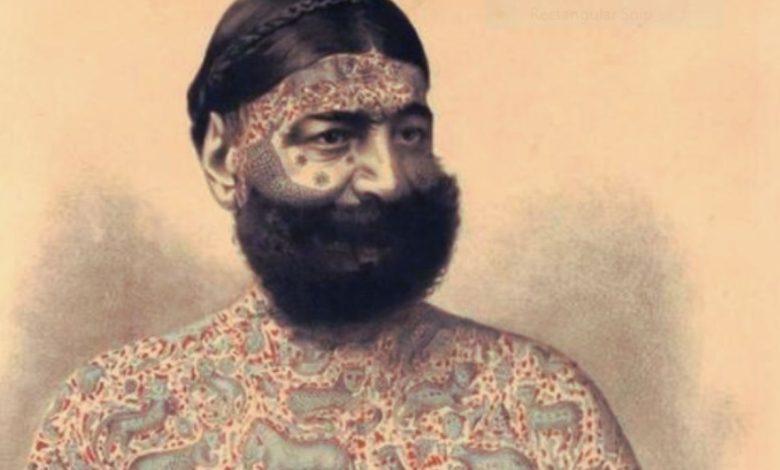
The extraordinary life of Prince Costentenus remains one of the most compelling chapters in nineteenth-century entertainment history. Adorned with hundreds of intricate tattoos covering nearly every inch of his body, the famed performer captivated audiences across Europe and America. His intriguing backstory and unique visual appearance turned him into a global sensation with P.T. Barnum’s circus.
Before stepping onto the American circus stage, George Costentenus—popularly known as Prince Costentenus—crafted a sensational origin story to fascinate curious spectators. He claimed to be a nobleman captured by insurgents during a military rebellion in Chinese Tartary. According to his dramatic narrative, captors forcibly tattooed his entire body over three grueling months as a form of punishment.
While modern historians view this narrative as a brilliant marketing stunt, the story captivated Victorian audiences. The intricate blue and red ink covered his skin from head to toe, leaving only the soles of his feet and palms bare. His elaborate markings featured figures of dragons, snakes, birds, and complex geometric motifs that looked genuinely otherworldly.
In the late 1870s, legendary showman P.T. Barnum signed the performer to his world-famous traveling show. Barnum recognized the immense commercial potential of displaying a fully tattooed man who claimed royal heritage. The public appetite for exotic oddities made the exhibition an overnight financial success across major American cities.
During his peak years on tour, the showman commanded an astronomical salary of up to $1,000 per week. That income placed him among the wealthiest side-show performers in circus history. Newspaper reporters marveled at his dignified demeanor, multi-language fluency, and the meticulous artistic detail embedded in his skin.
Behind the theatrical publicity lay a shrewd businessman who understood the power of public spectacle. Historical records suggest Costentenus was born in Albania or Greece and voluntarily acquired his tattoos in Burma. He recognized that European and American audiences would pay handsomely to see full-body ink art, which was exceedingly rare at the time.
Rather than suffering as a tragic captive, he leveraged his unique appearance to secure financial independence. His success paved the way for a wave of tattooed performers in sideshows and carnivals throughout the early twentieth century. His carefully cultivated image transformed body art from a taboo curiosity into a legitimate form of public entertainment.
After earning a substantial fortune from his world tours, the famous performer gradually retired from public life. He invested his earnings wisely and engaged in extensive charitable works during his later years. Despite his eventual retirement from the spotlight, his striking portrait remained an enduring symbol of Victorian sideshow history.
Today, vintage lithographs and photographs of Prince Costentenus are preserved in museums and private historical collections. Scholars of pop culture examine his career as a masterclass in nineteenth-century personal branding and media manipulation. His life story demonstrates how mystery, showmanship, and visual art could capture the public imagination on a global scale.