
What is your dog talking about?
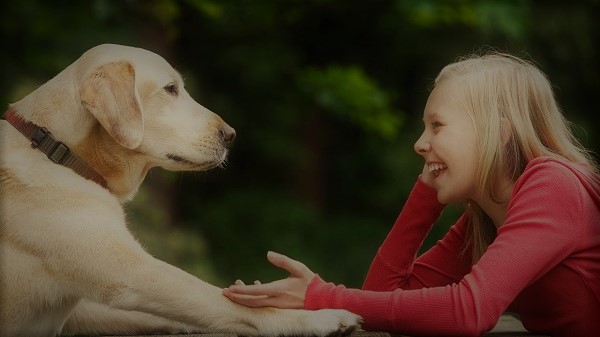
For a long time, the dog lived side by side with humans. From a wild beast, she has gone all the way to an irreplaceable friend who is able to bring not only material benefits but also just joy. Naturally, animals have also developed a certain language with which they try to communicate with their owner. Every dog owner who wants his pet to be happy should understand it. Unfortunately, not everyone realizes this. Hence, many difficulties arise with relationships and determining the place of the dog in the “pack”, that is, in your family.
The struggle for leadership, which is initiated by the person himself, who mistakenly believes that dominant and cruel behavior is one and the same, does not lead to anything good. But it is enough just to carefully observe the behavior of the dog in order to understand the motives of his actions. The dog most often does not try to compete with us at all. She wants to be a useful and loved member of society and expresses many emotions in the form of signs that must be understood. Here are some of the more common ones.
- Look
By carefully observing your dog’s gaze, you can easily understand its mood and even predict further actions. The dog may avoid eye contact, which is normal since a direct look in the animal kingdom indicates a threat. A dog looks sideways when it is embarrassed by what has happened or is in pain. A calm dog will not look away as soon as you look at him – he trusts you and feels confident. The threat can be shown by a “following” look when the dog, without meeting eyes, accompanies you.
- Sounds
Every sound your dog makes means something. An adult dog is able to “talk” in four ways. This growl is a threat, squealing is a vivid emotional experience, from pain to delight, barking is attention-grabbing and whining. With the help of the latter, the dog expresses its subordinate role in the pack.
- Ears
With the help of the ears, the dog shows almost the entire gamut of feelings available to her. In a calm state, they practically do not move. In case of danger, they stand erect and lean forward slightly. Back is a sign of the friendliness of the dog.
- Tail
Consider that almost all non-verbal communication is done by the dog with the help of the tail. There are, of course, also ears and a muzzle, but the main information is not transmitted by them. Many people think that tail wagging means approval or joy. This is not entirely true. It can be compared with the meaning of a smile in a person – after all, not everyone speaks of the pleasure of the owner, there is also a wry smile and others.
- Pulling
the leash Often dogs, especially young ones, behave in a certain way on a walk. In the first few minutes, the dog rushes forward, pulling hard on the leash. Don’t scold her for it. She does not seek to break free and run away and does not try to show her dominant position. Trying to stay ahead, the dog shows its usefulness for the pack: he plays a scout, always ready to warn the pack of danger.
Must Read: Do dogs have a memory?
- Howl
You don’t have to be afraid of your dog’s howling. This does not mean that she has turned into a werewolf and is going to have a good time. With the help of howls, the dog tries to find close relatives in order to participate a little in the social life of this virtual pack.
- Purposefulness
Dogs can look as purposeful as possible. You will not confuse about this state: the dog is focused and almost not distracted by third-party stimuli. Such a position suggests that something unusual for the dog is hiding very close and she still does not understand whether she should expect danger. By following the direction of the dog’s gaze, you yourself will be able to understand what the pet was so excited about.
- Size
Even the body of a dog is able to show you its true state. Frightened, she will try to become as small as possible. A hunched back, a tail pressed between its paws, and small steps – the dog is on the verge of escaping. A confident setting on all four paws, a protruding chest, and a raised head visually increase the body of the dog and speak of its dominance and readiness to stand up for itself.




One Comment