Middle East Tensions Spark New Wave of Global Demonstrations
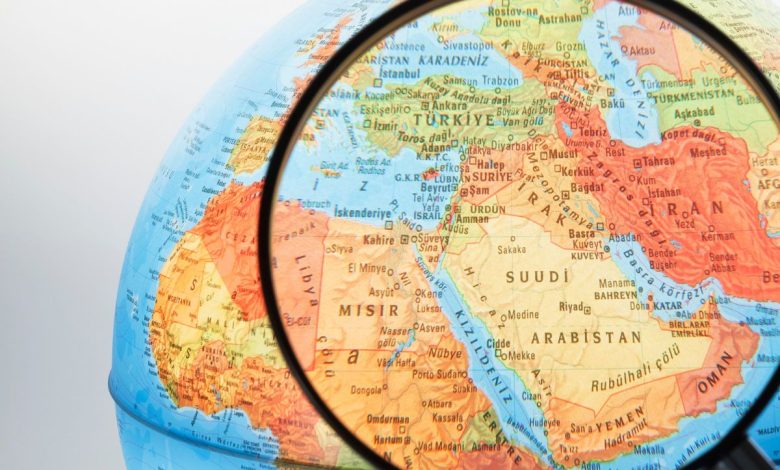
A sweeping new wave of global demonstrations over Middle East tensions has erupted across major international cities and the region itself as the Gaza conflict officially enters its third year. Sparked by recent military operations, border incursions, and a highly contested Israeli election, the unrest underscores a volatile geopolitical reality with immediate consequences for US foreign policy and domestic stability.
Recent intelligence data reveals that nearly 400 solidarity protests have been organized across 43 countries this month alone. The United States leads the international tally with 76 documented events, outpacing Spain, the United Kingdom, and Australia. From college campuses to major urban centers in New York and Washington, American law enforcement agencies have ramped up security around embassies and key municipal landmarks to handle the sustained public turnout. While European capitals like London, Paris, and Berlin saw thousands flood the streets to demand a ceasefire, localized anger is simultaneously boiling over in the Levant.
Within the Middle East, civilian frustration is escalating in response to fresh military maneuvers and the staggering humanitarian toll. After three years of fighting, the death toll in Gaza has surpassed 70,000, with much of the territory’s infrastructure completely destroyed.
The unrest is not confined to Gaza. In the Israeli-occupied West Bank, Palestinians staged protests in Hebron this week following a series of military demolitions and a strict blockade that closed land crossings during Tuesday’s Israeli elections. The military operation, launched after a deadly checkpoint shooting, displaced roughly 3,000 local residents. Many civilians suddenly found themselves cut off from essential services and medical care.
“Where is the democracy in all of this?” asked Noura Nassar, a displaced Hebron resident attempting to reach a doctor.
Similar unrest has erupted farther north. In Syria, demonstrations broke out in Damascus and the southern Daraa province. Syrian state media reported that crowds gathered to condemn recent Israeli incursions into a demilitarized buffer zone along the Golan border, protesting what they view as a dangerous expansion of the conflict.
For American taxpayers and policymakers, this intersecting global and regional instability carries a massive price tag. The protests coincide with a deadlocked national election in Israel, the first since the October 2023 Hamas attack. Early vote counts show Prime Minister Benjamin Netanyahu’s Likud party running neck-and-neck with former military chief Gadi Eisenkot’s Yashar party. Neither bloc currently has a clear path to the 61 seats required to form a governing majority in the Knesset.
This political paralysis in Tel Aviv deeply complicates Washington’s diplomatic efforts to de-escalate the multi-front war. The US military’s ongoing involvement in the broader conflict—spanning defense operations and engagements with Iranian proxies—has already cost American taxpayers an estimated $47.1 billion as of mid-October. A lack of clear leadership in Israel could delay any potential ceasefire negotiations, keeping US military spending sky-high and maintaining the constant risk of American troop casualties.
Anxiety is also mounting in Tehran and Washington. Iranian officials recently rejected what they called “unacceptable” diplomatic proposals from Qatari mediators, setting the stage for further escalation. With Israeli vote counting expected to stretch into the coming days, security forces across the globe are bracing for another intense weekend of demonstrations.