Long Before the Internet: How the Mundaneum Paper Google Prefigured the Digital Age
Long before digital algorithms indexed the web, the Mundaneum Paper Google attempted to gather, organize, and retrieve the entirety of human knowledge using millions of physical index cards. Established in Belgium during the early twentieth century, this ambitious analog search engine laid the visionary conceptual groundwork for hyperlinked information networks, online cataloging, and modern search engines decades ahead of its time.
At the turn of the twentieth century, Belgian legal scholars Paul Otlet and Henri La Fontaine shared a radical vision. They believed that organizing global knowledge and making it accessible to everyone would foster international peace. To realize this grand dream, they founded an ambitious institution in Brussels designed to record every book, article, and document ever published.
Otlet devised a sophisticated organizational framework known as the Universal Decimal Classification system. Unlike traditional library catalogs, this revolutionary method allowed indexers to link related concepts together. In essence, Otlet created an analog version of hyperlinks, allowing researchers to trace thematic connections across vastly different subjects.
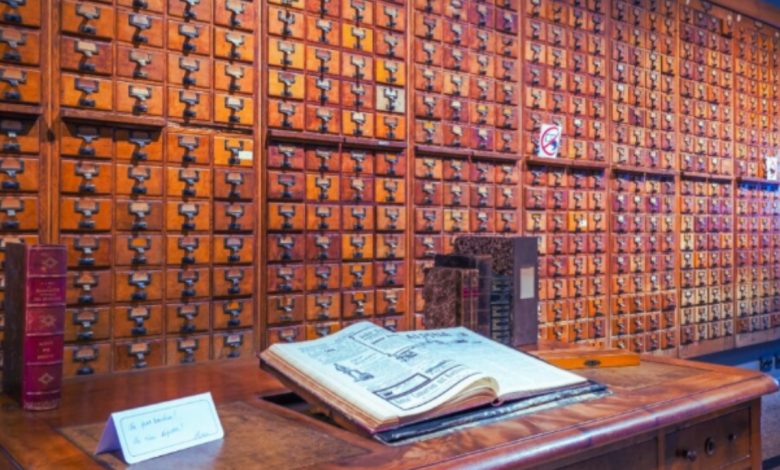
Operating the Mundaneum Paper Google required painstaking human effort and extraordinary spatial coordination. Teams of meticulous clerks organized millions of index cards into custom-built wooden cabinets. Each card contained detailed bibliographical data, summary notes, and cross-reference codes connecting it to other subjects in the massive wooden database.
The institution functioned surprisingly like a modern internet search engine. People from all around the world could submit inquiries via postal mail or telegraph. Employees would then manually search through the vast drawers of index cards, compile the requested information, and mail back copied responses for a modest fee.
Despite its initial success, the ambitious repository soon ran into insurmountable practical hurdles. As the volume of published literature exploded worldwide, physical cards and filing cabinets quickly overwhelmed available storage spaces. Government funding dried up during the Great Depression, placing severe financial strains on Otlet’s operations.
Tragedy struck during World War II when occupying German forces ordered the collection cleared to make room for an art exhibition. Thousands of irreplaceable documents were destroyed or discarded in the process. Decades later, the surviving collection was salvaged and relocated to Mons, Belgium, where it operates today as a museum celebrating the pioneers of information science.
Modern computer scientists routinely recognize Otlet as an unheralded father of information technology. Long before microchips or fiber-optic cables existed, he envisioned interconnected desk monitors where users could browse texts, view images, and share notes remotely. His visionary concepts directly anticipated the World Wide Web, online databases, and cloud storage systems.
Exploring the history of the Mundaneum Paper Google reminds us that the human desire to organize information transcends technological eras. While modern search engines rely on complex computer code and massive server farms, the core impulse remains identical to Otlet’s century-old dream of universal access to knowledge.