Royal Sleep Rituals: How French Monarchs Turned Bedtime into Political Power
Long before modern productivity hacks and power naps dominated daily schedules, the French monarchy transformed sleeping into a grand political performance. Every morning at Versailles, dukes, marshals, and princes lined up outside the royal bedchamber, desperately competing for the honor of handing Louis XIV his nightshirt. During the 17th and 18th centuries, European sovereigns elevated standard biological necessity into sophisticated court diplomacy.
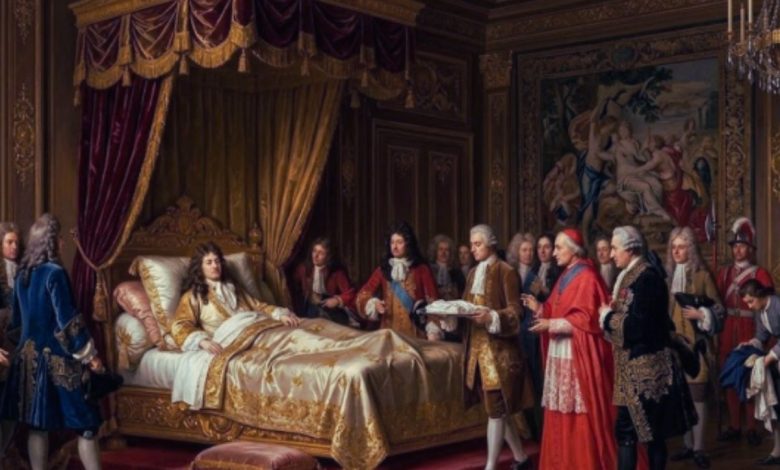
At exactly eight in the morning, the First Valet of the Bedchamber would announce the hour, initiating the intricate lever ritual. The King did not simply wake up; he was ceremoniously unveiled to waves of high-ranking nobles entering the room according to strict aristocratic hierarchy.
First came immediate family members and princes of the blood, followed by dukes, peers, and senior military officers. Each stage of the King’s morning routine, from washing his hands to slipping into his stockings, involved specific noblemen vying for the privilege of assisting. Holding the royal shirt wasn’t a domestic chore; it was the ultimate display of political influence and proximity to power.
Visitors strolling through Versailles today often marvel at the majestic state bed surrounded by gilded balustrades and rich velvet drapes. However, historians note that this grand piece of furniture functioned primarily as an official throne room rather than a cozy sleeping quarters.
King Louis XIV received diplomats, hosted mandatory morning assemblies, and projected absolute power directly from this central bed chamber. Yet, after the formal coucher ceremony concluded at night, the monarch frequently retired to smaller, warmer private apartments located behind the main walls. The public bed remained an instrument of royal propaganda, strategically placed at the literal center of the palace’s architectural layout.
These elaborate daily routines served a far more critical strategic purpose than mere vanity. Following the traumatic civil wars of the Fronde, where French nobles actively rebelled against the crown, Louis XIV devised a non-violent method to neutralize political threats.
By enforcing mandatory attendance at daily royal sleep rituals, the Sun King transformed Versailles into a gilded cage. Noblemen who abandoned court to manage their rural estates risked losing royal pensions, military commissions, and social standing. Instead of plotting insurrections in distant provinces, the country’s most powerful lords spent their energies fighting over who got to hand the King a glass of water.
While the aristocracy engaged in scripted theatrical wakeups, the general population lived by an entirely different biological rhythm. Research into pre-industrial sleeping habits reveals that most people practiced segmented or two-phase sleeping patterns.
Ordinary citizens typically fell asleep shortly after dusk for roughly four hours during their “first sleep.” They would then wake up around midnight for an hour or two of quiet activity—reading, praying, or socializing—before falling back into a “second sleep” until dawn. Wealthy elites were among the first to abandon this natural rhythm, using artificial lighting, late-night court galas, and morning ceremonies to redefine social status through continuous sleep.