How Britain turning plastic bottles into super-durable roads
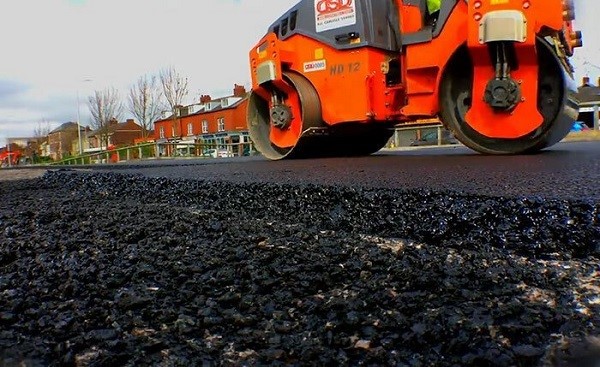
Britain is turning plastic bottles waste into super-durable roads. Scottish company MacRebur builds roads from recycled plastic, successfully replacing asphalt with it.
When Scottish engineer Toby McCartney, visiting India, saw how the locals melted empty plastic bottles to fill road holes with the resulting mass, he had an idea. Now McCartney is the owner of a company that builds roads and highways from used plastic!
Scottish company MacRebur builds roads from recycled plastic, successfully replacing asphalt with it. CEO Toby McCartney came up with the idea while he was working in southern India on a charity program to help so-called ‘scavengers’ – people who look for recyclable items in landfills and sell them,” the company’s website says. McCartney, in particular, saw how plastic bottles collected by “garbage men” are used in roadworks: Indian road workers poured molten plastic into holes in the asphalt. So McCartney had an idea.
In April 2016, McCartney and his friends, Gordon Reed and Nick Burnett, founded MacRebur and began developing a formula for the future of road surface and recycling technology. It took over a year to develop. But now production is running at full capacity.
The collected plastic bottles are passed through a granulator, which cuts them into crumbs up to 5 mm in size. The plastic crumb is then mixed with a proprietary activator, the formula of which is kept secret by the company. As a result, a vicious asphalt-like mass is obtained, which as a road surface is not inferior in characteristics to asphalt.
Asphalt is made from stone and bitumen, but MacRebur’s technology replaces bitumen with a plastic mixture, helping to reduce the use of natural hydrocarbons, among other things.
The new technology has another advantage: while bitumen melts at 180 degrees Celsius, 120 degrees is enough for the plastic mixture to go into a homogeneous state.
“We can use almost any plastic, including black plastic, which is traditionally difficult to recycle,” says McCartney proudly.
According to McCartney, roads made from the new plastic compound are 60% more durable than asphalt roads. The company is confident that this development will have a great and glorious future.