Ancient Egyptian Art Secrets: Why Pharaonic Wall Paintings Look Flat and Unnatural
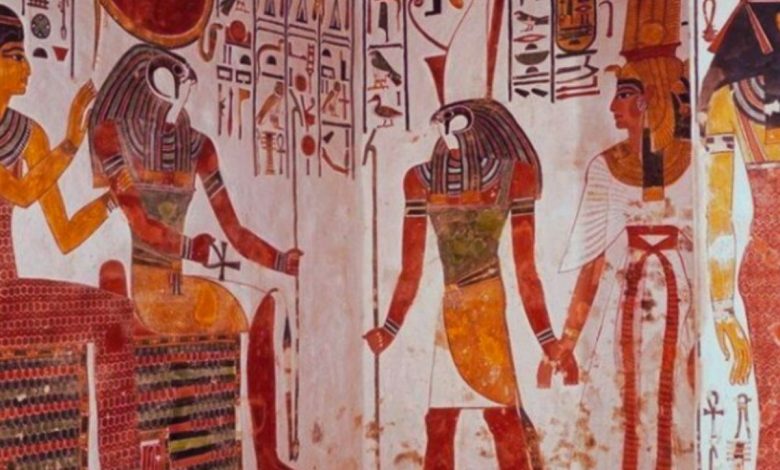
Anyone walking through a museum or looking at tomb murals will immediately recognize the distinct visual style of the Nile valley: heads turned strictly in profile, torsos facing squarely forward, and eyes looking straight out at the viewer. For generations, casual observers have wondered whether the artisans of the Nile lacked technical skill or understood depth perspective. In reality, Ancient Egyptian Art was never meant to capture a realistic moment in time, but rather to construct a timeless, sacred reality designed to endure for eternity.
The unique presentation of human figures in tomb reliefs stems from what art historians call composite perspective or aspective art. Rather than painting what the human eye sees from a single vantage point, ancient master painters combined the most identifiable angles of each body part. Heads were rendered in profile to clearly show the nose and mouth, while a single eye was drawn from the front to preserve its full shape.
Similarly, shoulders and chest were drawn facing forward to show both arms clearly, while the legs and feet were depicted sideways to highlight movement. In Ancient Egyptian Art, hiding a limb behind perspective shadowing was viewed as robbing the subject of that body part in the afterlife.
Master craftsmen followed a rigid grid system and standardized canons developed during the Old Kingdom. These guidelines dictated exact proportions—typically 18 squares tall from the soles of the feet to the hairline. Deviating from these proportions was considered an violation of Ma’at, the divine order of the universe.
Distance and space were not represented by making background objects smaller. Instead, painters relied on hieratic scale to communicate power and spiritual standing. Pharaohs and deities dominated murals as gigantic figures, while wives, children, scribes, and workers were rendered significantly smaller.
Most 2D murals were created inside sealed tombs and temple chambers, never intended for public viewing. They functioned as functional magical spells designed to guarantee the deceased a flawless transition into the afterlife. By preserving every anatomical detail in its ideal form, Ancient Egyptian Art ensured that the spirit would possess a complete and functioning body forever.