Buton Tribe Blue Eyes: The Genetic Wonder of Indonesia’s Island Paradise
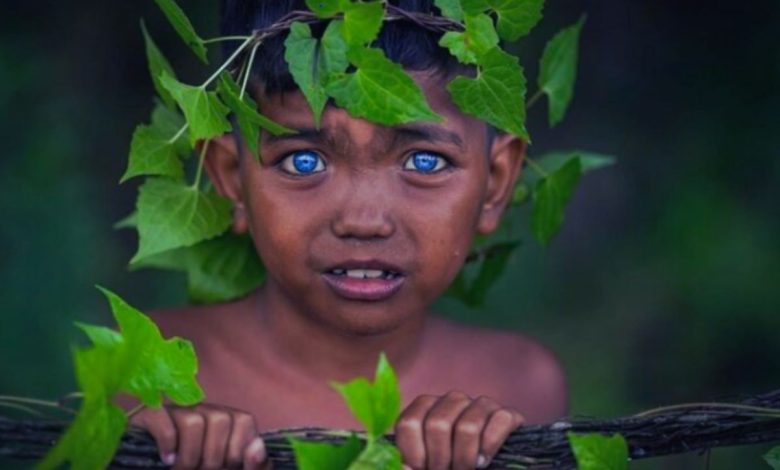
Deep within the lush tropical landscape of Buton Island in Southeast Sulawesi, Indonesia, lies a community whose striking appearance defies regional genetic expectations. The phenomenon of the Buton tribe blue eyes presents a mesmerizing contrast against dark skin and rich black hair, turning heads across the globe. While deep brown eyes are standard across Southeast Asia due to high melanin concentrations, this isolated island community harbors individuals with electric, ocean-blue irises that seem almost otherworldly.
The presence of Buton tribe blue eyes is driven by a congenital condition known as Waardenburg syndrome. This complex genetic mutation disrupts the production and distribution of melanin during embryonic development. Melanin is the biological pigment responsible for giving color to human skin, hair, and eyes.
When melanin levels in the iris drop dramatically, light scatters across the structural stroma in a process called Rayleigh scattering. This creates the visual effect of bright blue eyes rather than typical dark brown tones. Within this unique tribal group, the gene mutation has passed down through generations, maintaining a persistent genetic footprint in an otherwise geographically isolated population.
Not every member of the indigenous Buton population carries two blue irises. The condition manifests in fascinatingly varied ways across different families. Many individuals exhibit complete heterochromia, possessing one brilliant sapphire eye and one deep brown eye.
Researchers studying the genetic strain note that the underlying mutation tied to the OCA2 and associated pigmentation genes affects more than just iris shade. It can alter skin pigmentation patches and produce silver or white forelocks in dark hair. These distinct physical features make the tribe’s appearance instantly recognizable and biologically unique within Indonesia.
Living with Buton tribe blue eyes involves specific environmental and health considerations for the islanders. Because blue irises contain far less protective pigment, affected individuals often experience extreme sensitivity to bright sunlight. They frequently squint or seek shade during peak midday tropical heat to protect their vision.
Beyond light sensitivity, severe variants of Waardenburg syndrome can cause inner ear abnormalities leading to varying degrees of sensorineural hearing loss. Despite these physical trade-offs, the community remains tightly knit and welcoming. Island residents view their distinctive eyes not as a burden, but as a signature trait connecting them to their shared ancestry.
The island of Buton gained international attention when local photographers captured high-resolution portraits of tribal members. The stark visual interplay between traditional Indonesian features and bright blue irises captivated audiences worldwide. Today, visitors and researchers view Buton as a living testament to the vast diversity of human genetics and natural inheritance.