Marine Archaeologists Make Historic Find as World’s Oldest Shipwreck Wreckage Uncovered in the Mediterranean
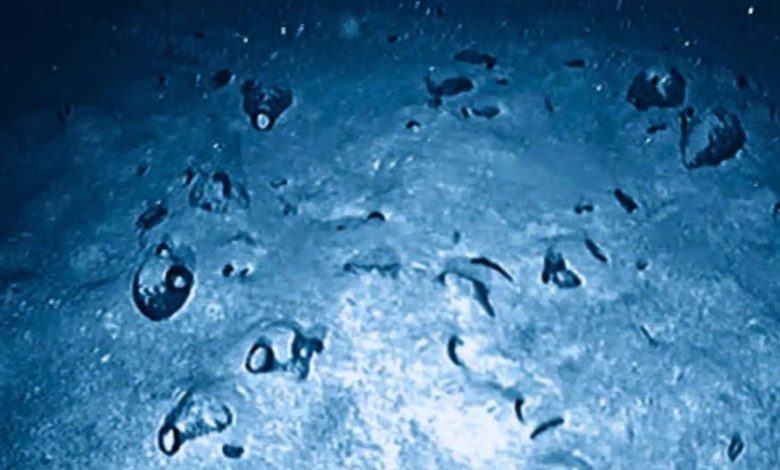
In a ground-breaking discovery that fundamentally shifts our understanding of ancient maritime exploration, the world’s oldest shipwreck wreckage uncovered off the Mediterranean coast reveals complex Bronze Age trade networks active over 4,500 years ago. Marine archaeologists using advanced deep-sea acoustic sonar pinpointed the vessel resting silently under nearly 50 meters of water, preserving pristine ceramic storage amphorae alongside valuable copper ingots.
The expedition was tracking routine geophysical anomalies when high-frequency sonar pinged against an unusually uniform mound on the seafloor. What researchers initially logged as potential geological formation quickly transformed into a landmark archaeological site. The wooden hull itself has largely degraded over millennia, yet the silhouette formed by heavy cargo remains unmistakably distinct.
Preservation conditions at a depth of nearly 50 meters protected the artifact cluster from destructive surface swells and modern fishing trawlers. Densely packed clay amphorae lay half-buried in marine sediment, surrounding raw copper ingots poured into ancient oxhide shapes. Early surface scans indicate the vessel sank suddenly during a coastal journey, leaving its commercial cargo intact for four and a half millennia.
The true value of this discovery extends far beyond the physical age of the timbers. Intact ceramic storage jars retrieved from the site feature intricate geometric painting styles characteristic of early Levantine and Near Eastern artisan traditions.
Comparative analysis confirms these exact decorative patterns mirror pottery assemblages cataloged at coastal Aegean harbor sites. Historians previously theorized that early Bronze Age civilizations relied primarily on overland routes or brief cabotage sailing between adjacent settlements. Finding this heavy commercial vessel loaded with cross-regional goods rewrites the timeline of long-distance open-sea navigation.
Prior archaeological consensus held that structured sea commerce across the Mediterranean developed much later during the late Bronze Age expansion. Seeing these early Near Eastern artistic markers together with raw copper destined for Aegean furnaces shifts maritime history back by several centuries. The voyage proves that organized merchant fleets braved treacherous open waters when urban centers were first rising.
Locating a site submerged under 50 meters of seawater required a departure from traditional visual diving surveys. The expedition team relied on side-scan acoustic systems capable of penetrating layers of ocean floor silt without disturbing fragile artifacts buried beneath.
Remotely operated vehicles equipped with high-definition cameras followed the sonar maps to capture structural coordinates of the cargo field. Engineers recorded every jar position to create a millimeter-accurate digital twin before touching a single piece of pottery. This non-invasive approach ensures that surrounding sediment structures remain stable while archaeologists carefully excavate select diagnostic pieces.
Beyond ceramics, the cargo of copper ingots provides critical clues regarding Bronze Age economic networks. Copper was the lifeblood of early industrial growth, essential for smelting bronze weapons, farming tools, and architectural fixtures.
Analyzing the trace chemical signatures inside these metal blocks allows researchers to pinpoint the exact mine where the ore was originally extracted. Early spectrographic tests hint at origin points far inland, proving that overland supply chains funneled raw metals directly into coastal ports for maritime export.
Understanding how early societies managed complex transport chains reshapes historical perspectives on regional interdependence. Coastal communities were not isolated outposts struggling against the sea; they were dynamic hubs connected to international financial networks. As research continues, the site promises to yield further insights into sailor life, ancient shipbuilding techniques, and early navigation knowledge.