From Debt Repayment to Royal Prestige: The Hidden Impact of Wet Nursing History
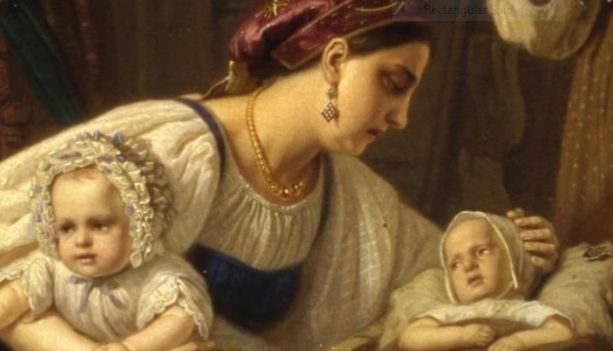
Understanding wet nursing history exposes a profound economic and social dynamic that spanned centuries across royal courts and impoverished rural villages. Before commercial formula existed, infant survival frequently depended on wet nurses. Women entered this demanding profession for vastly different reasons, ranging from desperation and paying family debts to obtaining unprecedented influence within aristocratic households.
In ancient times and through the early modern era, wet nursing operated as both an essential medical service and a harsh economic transaction. Poor women who had recently given birth often hired out their maternal milk to wealthier families. In many European and Asian societies, peasant mothers took on these duties to settle mounting household debts or earn income for starving families.
This economic necessity carried a heartbreaking human cost. To feed an employer’s child, a wet nurse frequently had to send her own newborn to rural foster mothers or overcrowded foundling homes. Mortality rates among the biological children of wet nurses remained tragically high. What brought life and nutrition to an affluent household often came at the direct expense of a poor mother’s own offspring.
At the opposite end of the social spectrum stood the prestigious royal wet nurse. Within European monarchies and Imperial Asian courts, wet nurses occupied a unique position of trust and power. Analyzing wet nursing history reveals that monarchs like King Louis XIV of France retained deep lifelong affection for their milk-mothers, often granting them noble titles, luxurious living quarters, and generous lifetime pensions.
Royal families selected these women through rigorous screening processes. Courtiers evaluated candidate health, moral character, emotional temperament, and physical appearance. Because aristocrats believed milk transmitted personality traits and bloodline characteristics, chosen wet nurses received pampered treatment, rich diets, and dedicated servants to ensure the highest quality nutrition for royal heirs.
During the eighteenth and nineteenth centuries, medical authorities began heavily scrutinizing wet nurses. Physicians published lengthy treatises arguing over whether a nurse’s mood or diet could curdle milk or pass undesirable moral flaws to infants. Wealthy families routinely inspected a prospective nurse’s teeth, skin, and family background before finalizing employment contracts.
Despite constant medical oversight, commercial wet nursing agencies flourished in major cities like Paris, London, and Saint Petersburg. Middle-class families increasingly hired wet nurses to free mothers for social duties or factory labor. The industry grew so large that governments eventually established regulatory bureaus to inspect nurses and protect infants from neglect or malnutrition.
The end of the nineteenth century marked the beginning of a rapid decline for the wet nursing industry. Breakthroughs in microbiology and the development of pasteurization made animal milk significantly safer for human infants. At the same time, inventors developed reliable rubber nipples and early commercial infant formulas, providing parents with accessible feeding alternatives.
As public health campaigns emphasized maternal breastfeeding and clean artificial feeding, reliance on wet nurses faded. What had once been a major socio-economic institution spanning millennia gradually transformed into a rare luxury, before disappearing entirely from modern family life. Today, looking back at wet nursing history offers a sobering glimpse into past struggles surrounding maternal health, social inequality, and child survival.